


Thread: QingQi Motorcycles Factory Tour
Results 1 to 10 of 34
|
|
-
#1 QingQi Motorcycles Factory TourAdministrator-tron

- Join Date
- Apr 2008
- Location
- NoVA
- Posts
- 2,540
 04-18-2008, 04:35 AM
Mr. George Jiao of QingQi Motors works in their International Marketing Department and was nice enough to take a full day out of his very busy schedule to give my wife and I a personally guided tour around their engine factory, Rn’D department and assembly line.
The production of parts and assembly quality control are two major concerns for people looking into buying a China-Moto. I hope this post demystifies the process and gives you a visual understanding of how your parts get manufactured, checked and assembled before they reach your door. Naturally not all factories use identical machines and work flows but this article will give you a good general outline of how your China-Moto comes to be!
We started off in the Engine parts manufacturing plant where QingQi OEM's engine and engine parts for a few international companies including Mercury Marine Engines and Peugot.
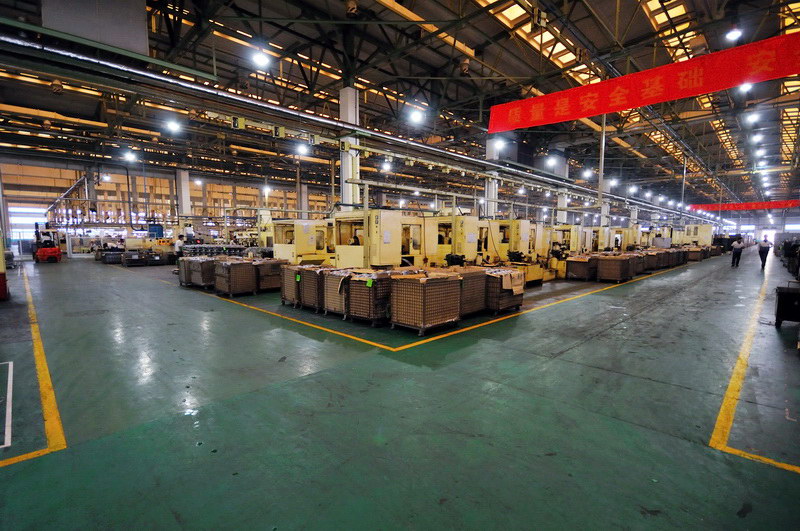
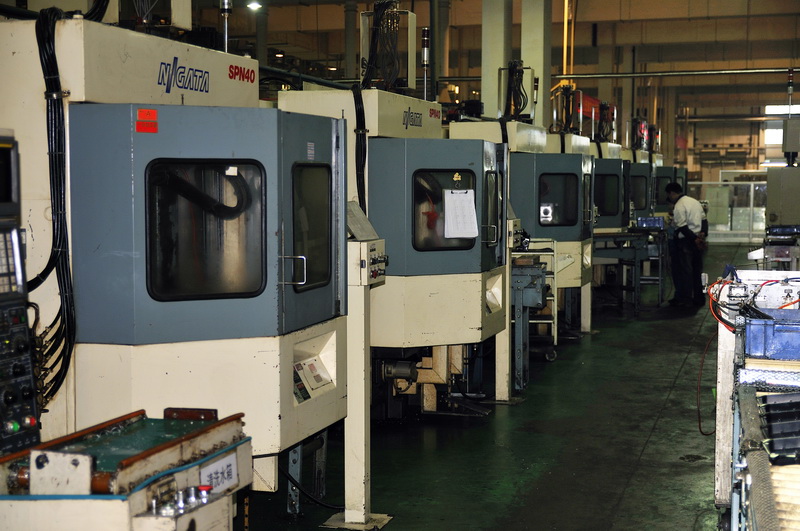
- One of the many lines of CNC machines –
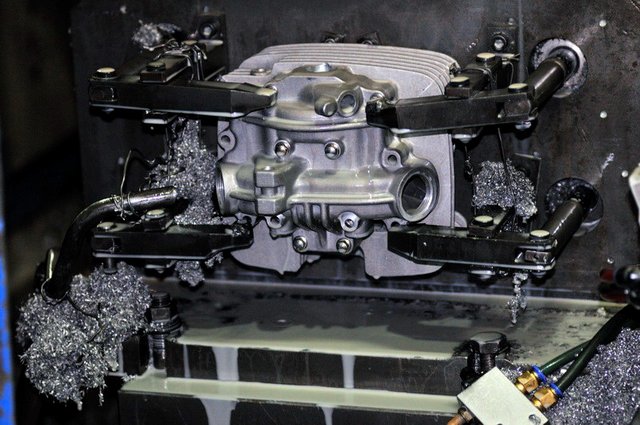
- Engine head fresh off the CNC -
- Engine Case fresh off the CNC -
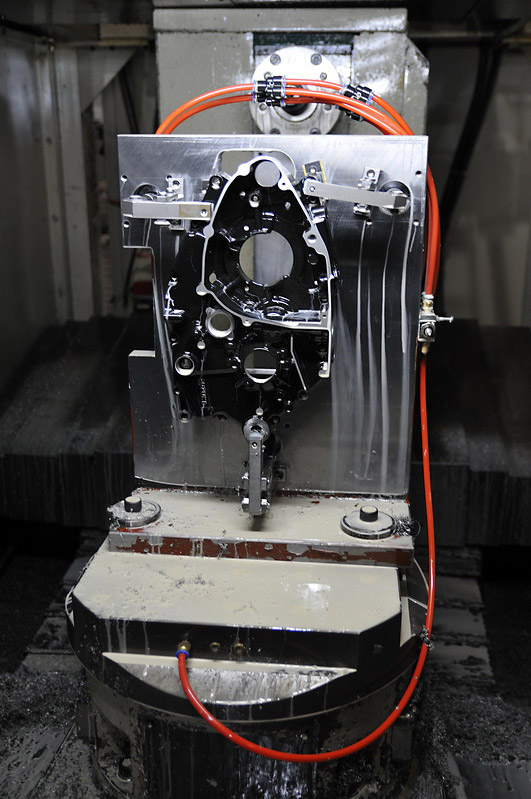
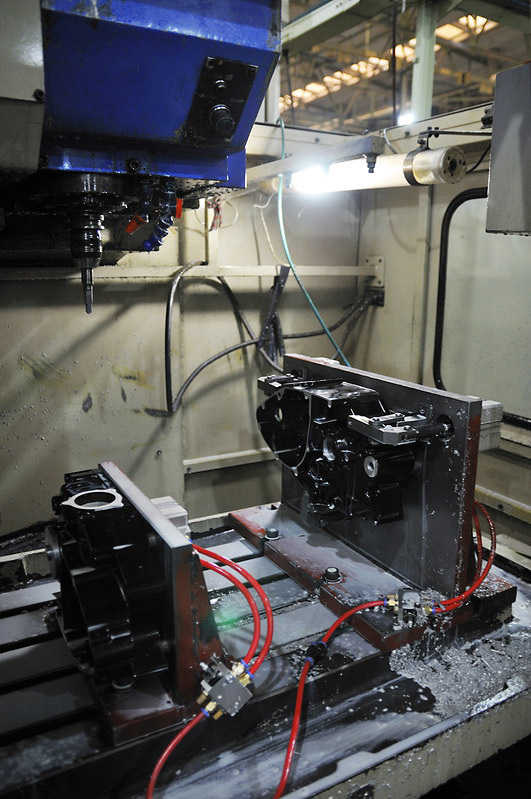
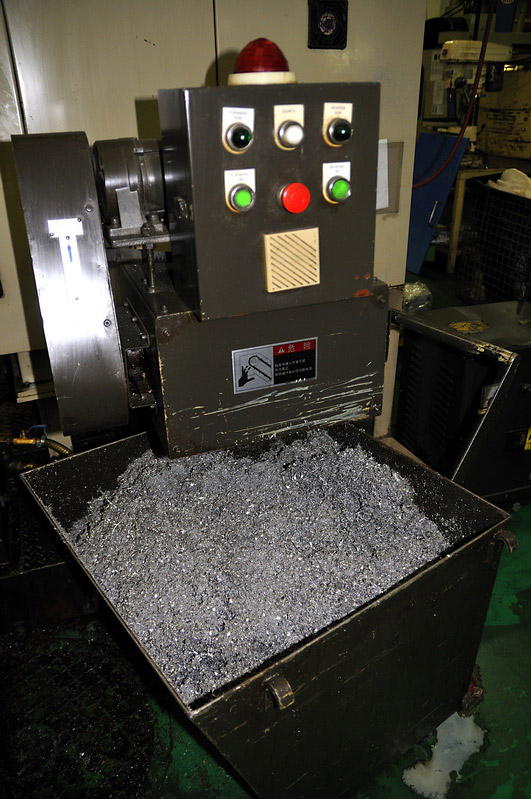
As you can see, the drilling and CNC process leaves huge quantities of metal shavings which are collected and recycled.
- Excess materials bin -
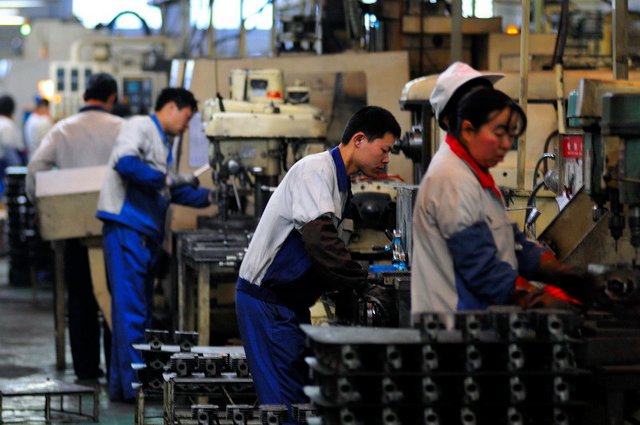
When the parts come out of the CNC’s they still need some work, like holes drilled and burrs removed. Parts are then passed to workers on drill presses who finish the piece.
- The QingQi folks hard at work -
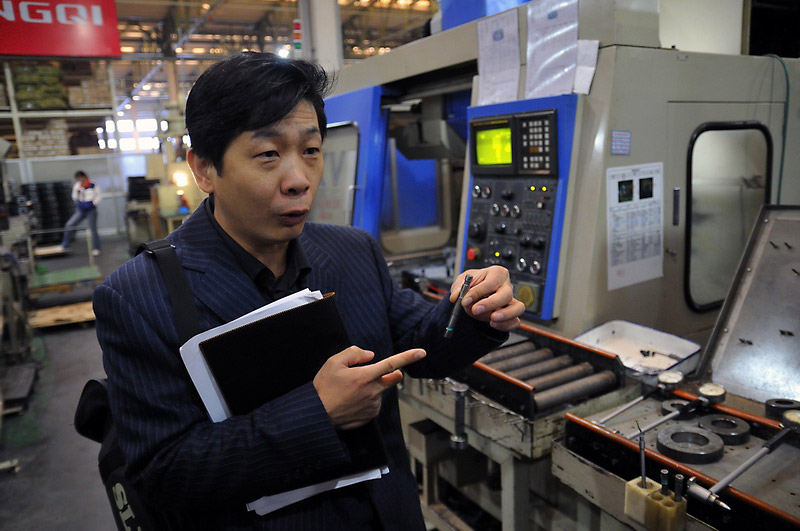
Parts finally get checked for quality and manufacturing tolerances.
- Mr. Jiao showing us the tools workers use to check diameter consistency of drilled holes-
- Mercury engine visual inspection -
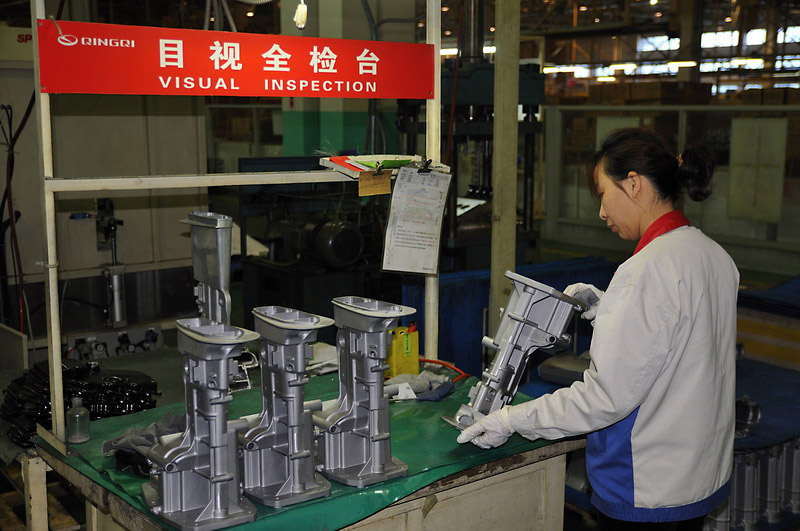
- Case component visual Inspection -
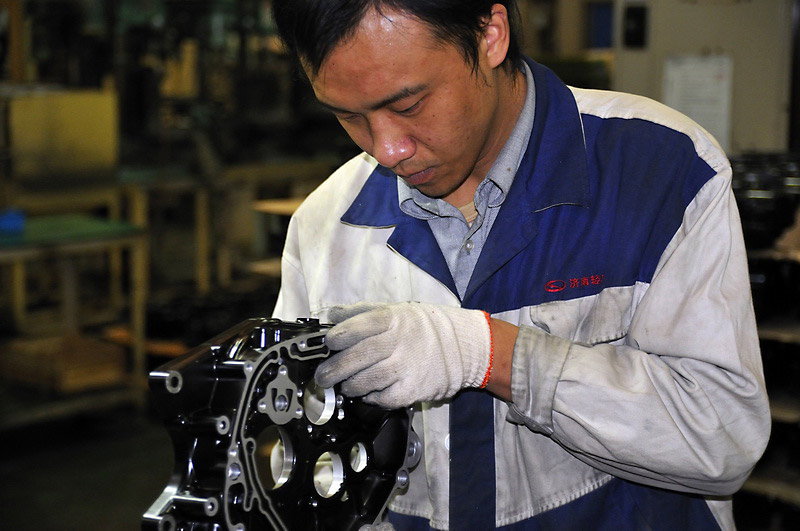
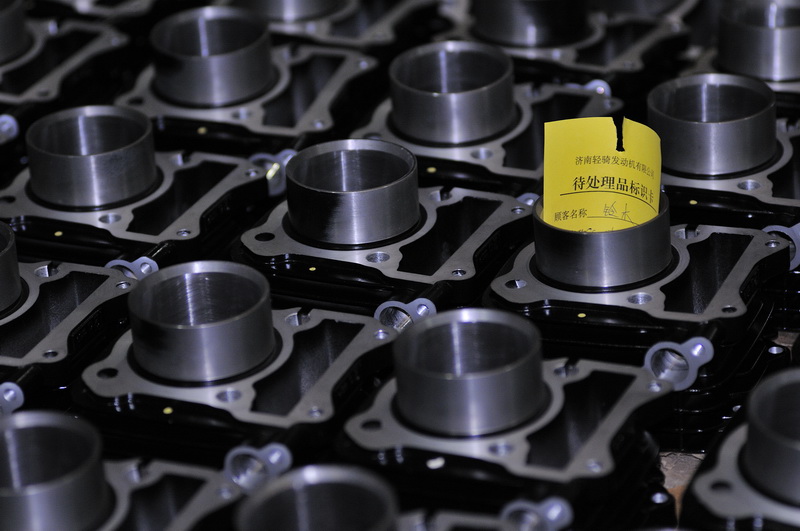
Defective parts are flagged by a little yellow card for appropriate action and this is similar to that we’ll see in the bike assembly line later.
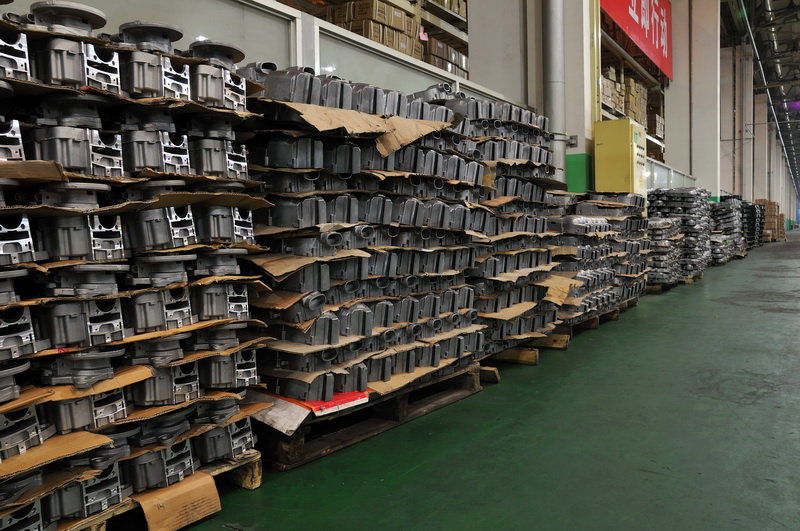
- Parts that pass are stacked and wait for their turn on the assembly line -
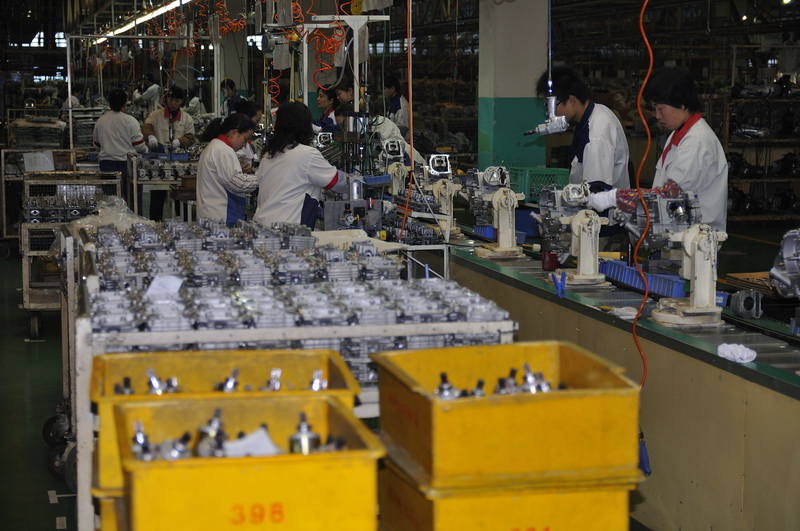
Engine Assembly and Testing Line
When they hit the line, the workers assemble all the pieces methodically and carefully. Everyone took their job quite seriously. I didn't see anyone fooling around, playing card games in the corner or scratching their armpits as units went by.
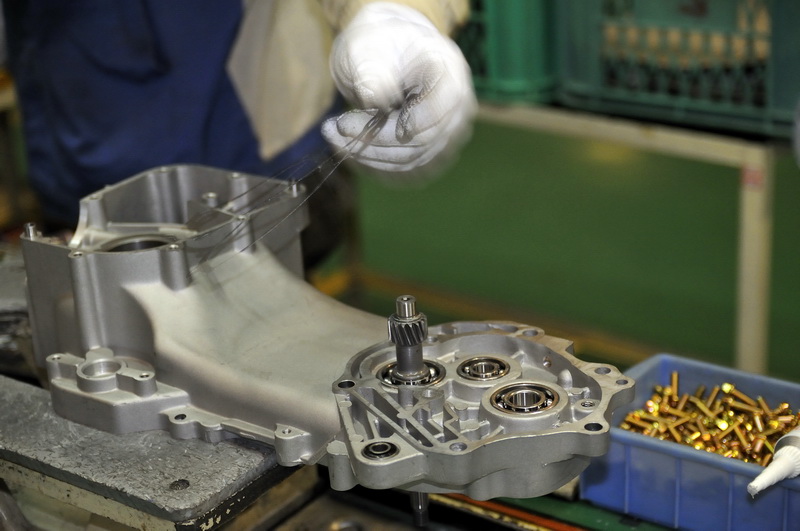
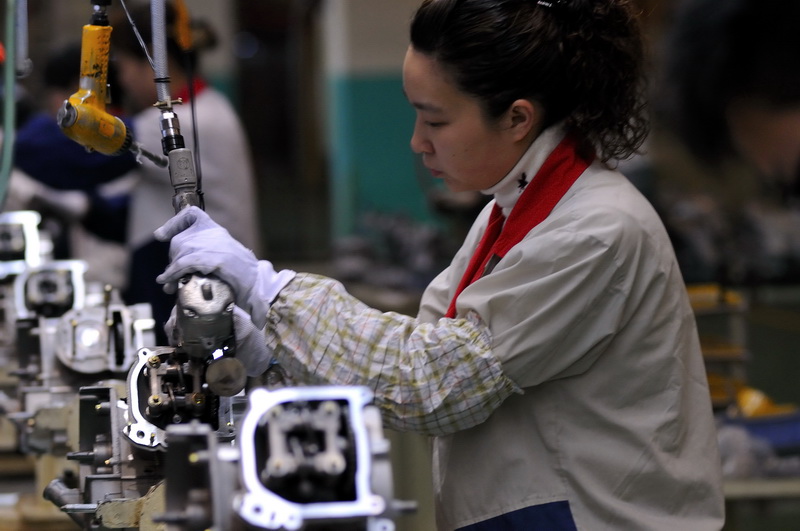
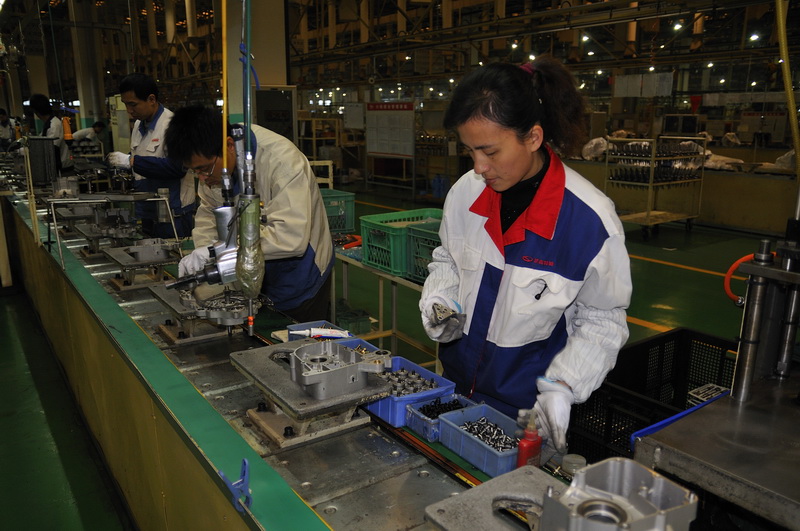
When the units are completed, they go for a ride on what looks like an inverted roller coaster for engines...man I wish I had one of these in my house!
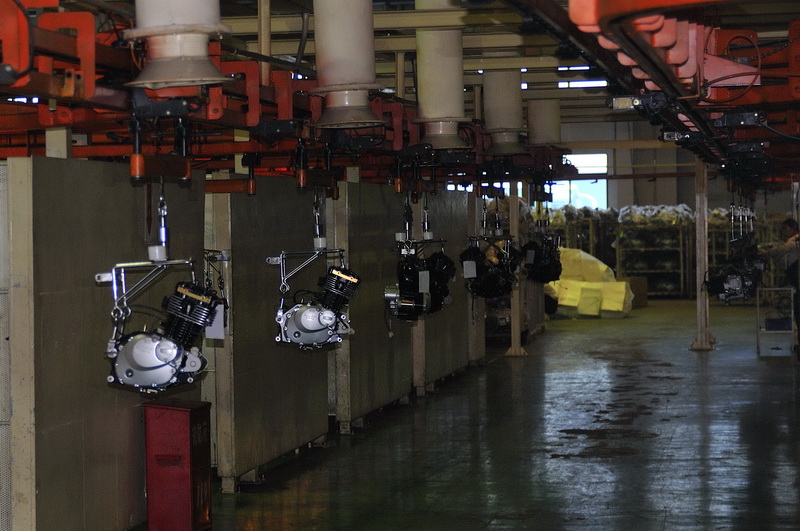
They are then pulled into inspection bays and tested for power production, electrical output and a host of other checks.
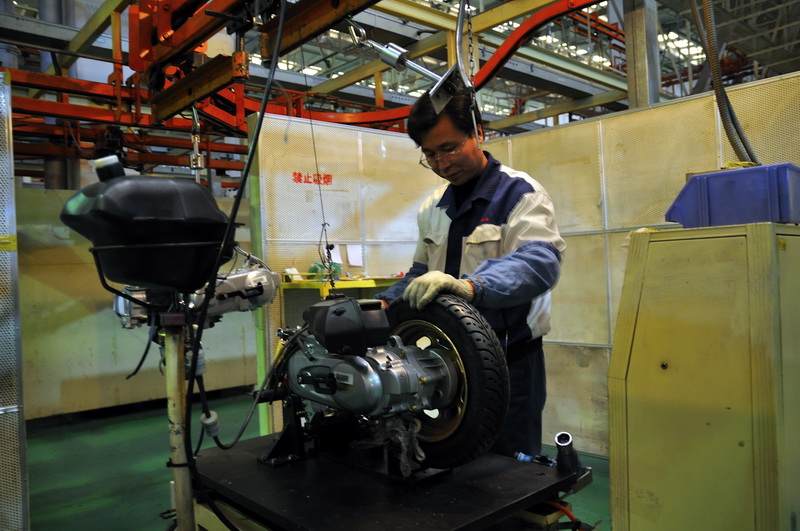
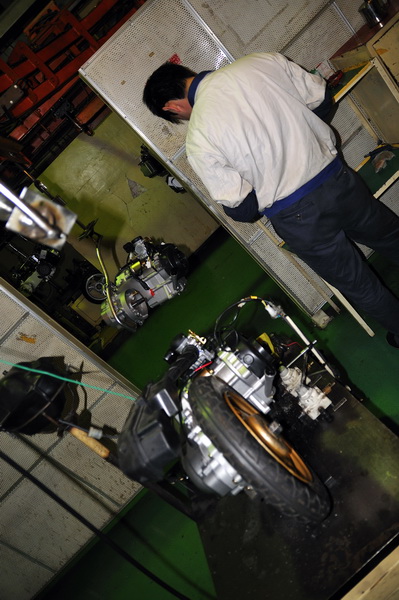
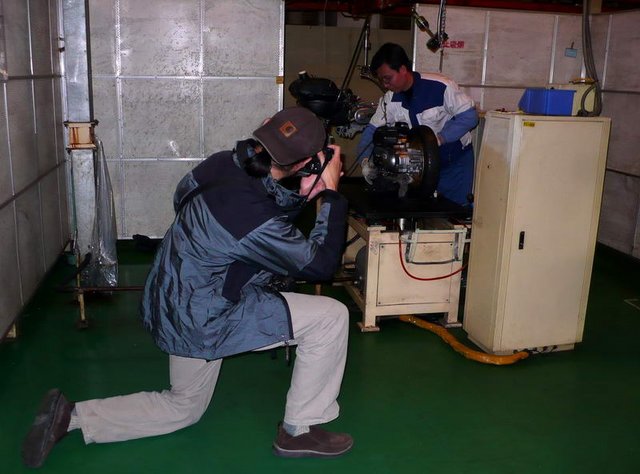
- Me hard at work but loving life in one of the many engine testing bays -
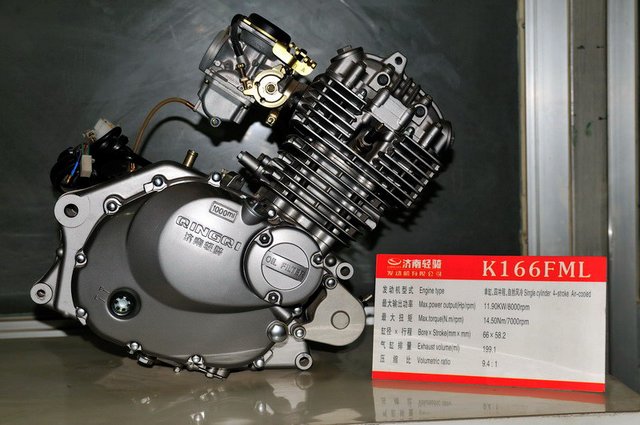
- A finished product: FX200 engine - Confirmed DR200 compatibility -
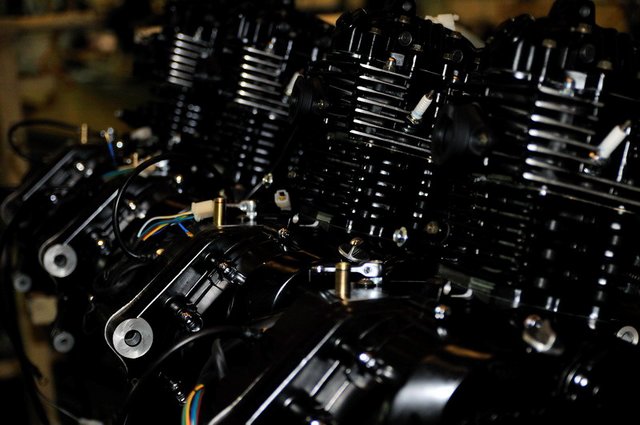
- Back in Black -
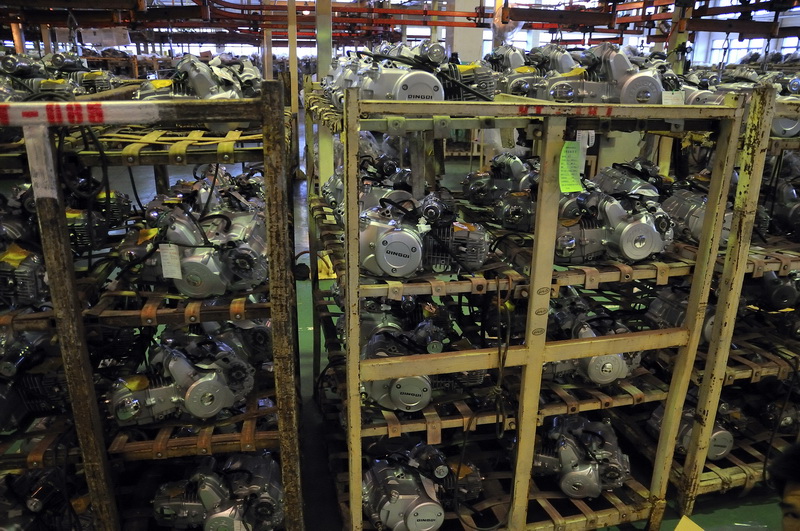
- Stacked engines waiting to be sent to the assembly line -
Then when they're all good to go, Mr. Motor gets stacked up and awaits transport to the assembly line where he'll meet Mr. Friendly Frame and Princess Plastics. After having been to several other factories, I can say my visit there bolstered my confidence in their product and look forward to testing their metal this May on some bad roads at high altitude. From the engine side of things I think QingQi has one of the best deals going in the business since they have use of Suzuki's tried and true small engine technology.
-
#2 Qingqi Factory Tour - Assembly LineAdministrator-tron
- Join Date
- Apr 2008
- Location
- NoVA
- Posts
- 2,540
04-18-2008, 06:00 AM
The assembly line is where the magic really happens and all the components come together to create a machine which can have a profound impact on our lives. This step is extremely important in insuring our motos are legal and safe to ride.
Frames, engines and other parts often purchased from outside suppliers like gauges are collected and prepped for assembly.
- Frames getting rolled in -
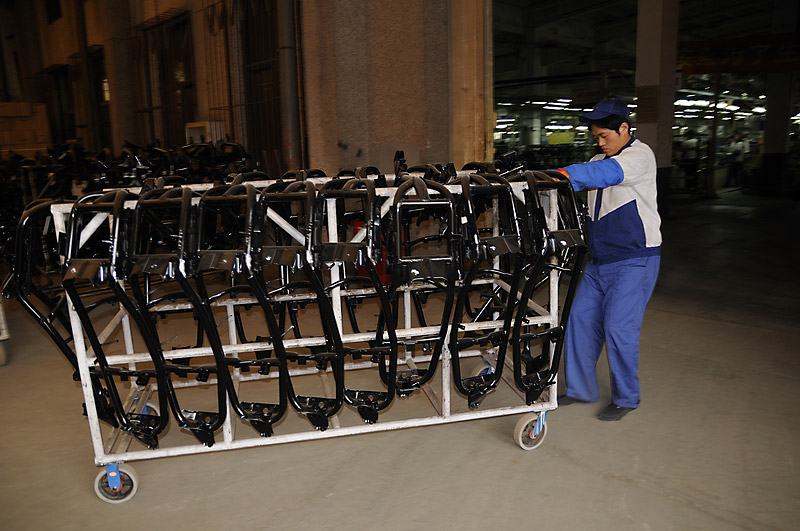
-Frame prepping -
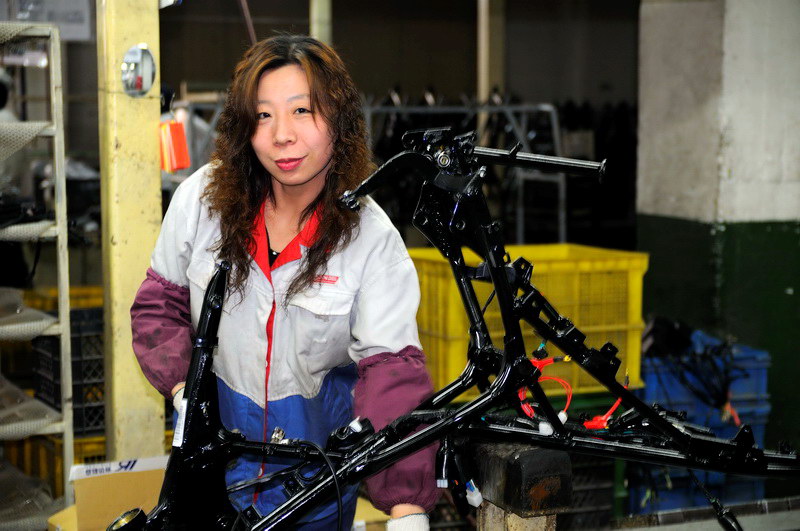
- Coming down the line -
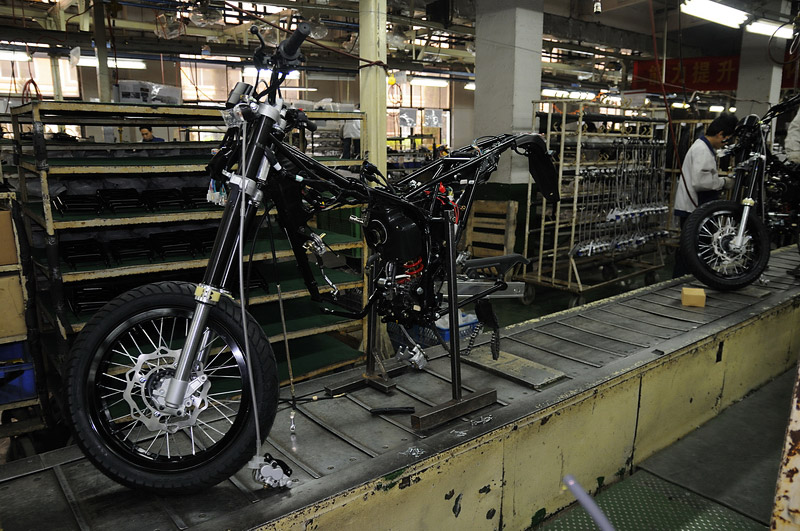
Engines are lifted and aligned with help of a hanging arm but ultimately rely on good ol’ human attention to detail for proper fitting.
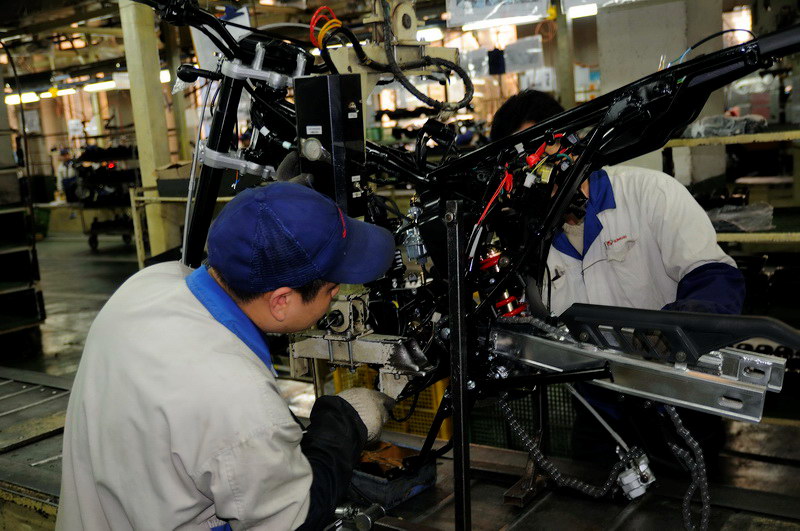
-Engine Placement -
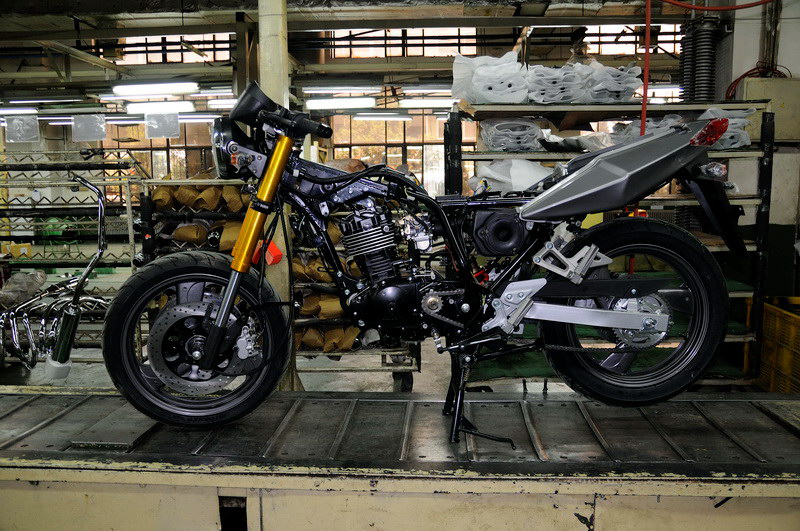
- The plastics are the last pieces to go on -
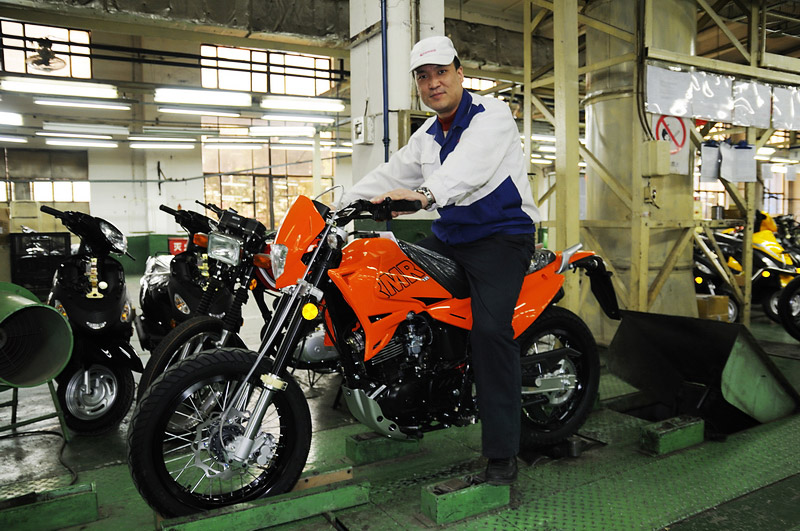
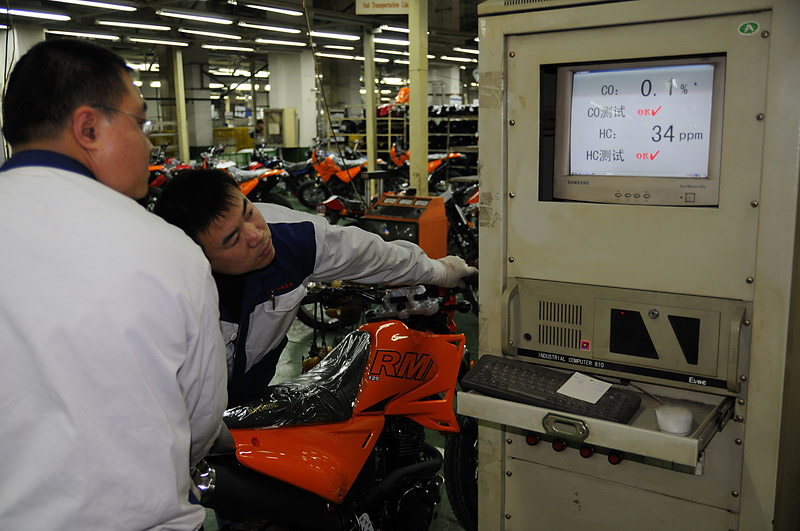
After the bikes are finished, they await a full battery of tests important for making sure your bike meets government regulations.
- Lined up for testing -
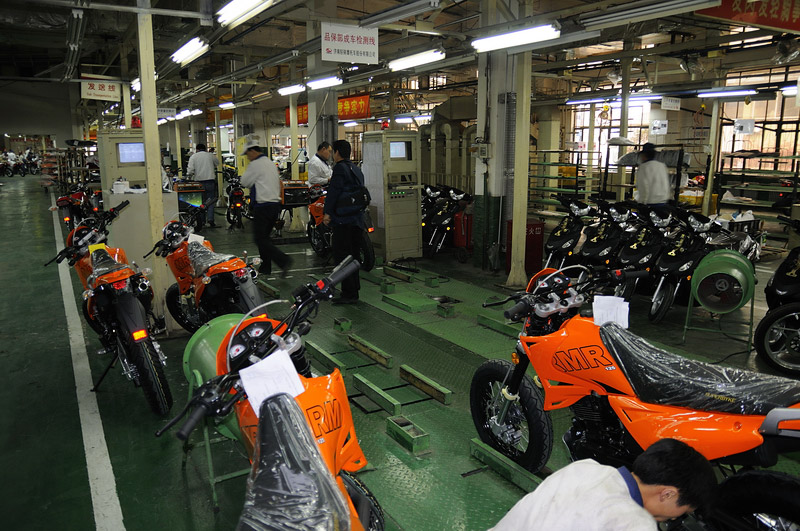
- Getting ready to test, gauges and controls are checked -
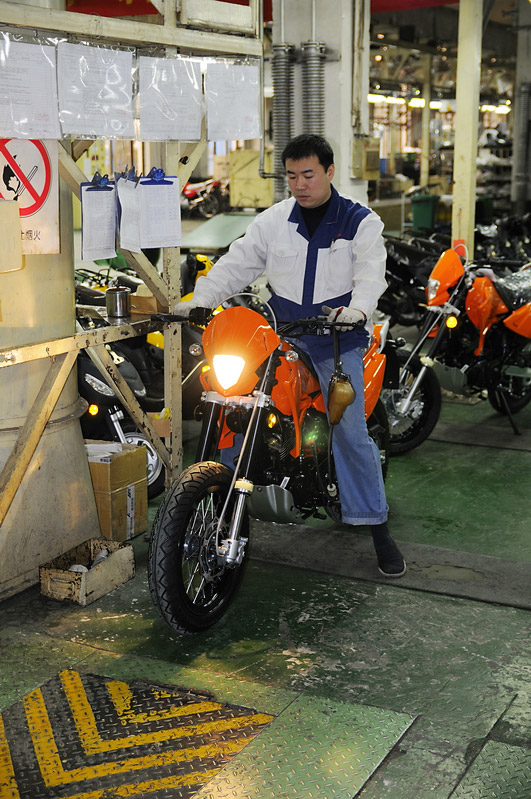
- Checking alignment and braking -
- All bikes are checked for emissions and noise compliance -
- Visual inspection area -
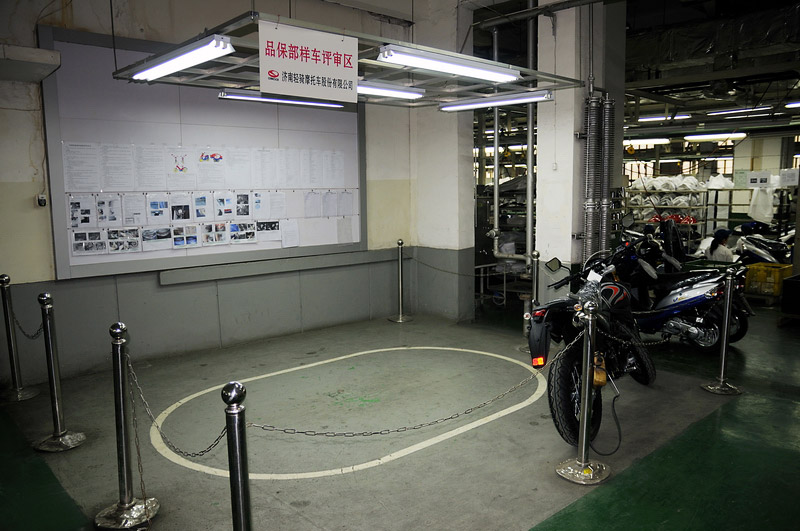
Understandably the biggest concern with most any Chinese products is quality control and for Western markets this can make or break a business. QingQi’s quality control process is well organized and very transparent although still not perfect as I’ve noticed slight variations of fit and finish from sample to sample. Nevertheless, it’s very clear that QingQi is stressing and improving this aspect of production and have started to keep individual customer records on warranty claims. I’ll comment more on this in future articles.
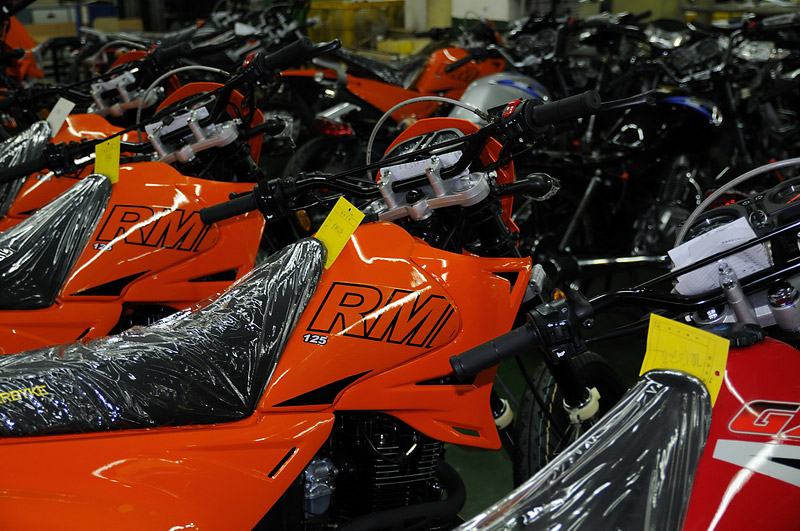
If a flaw is found, yellow quality control tags are placed and the bike pulled out of line -
- Yellow tags stuck on the seat indicate a problem product -
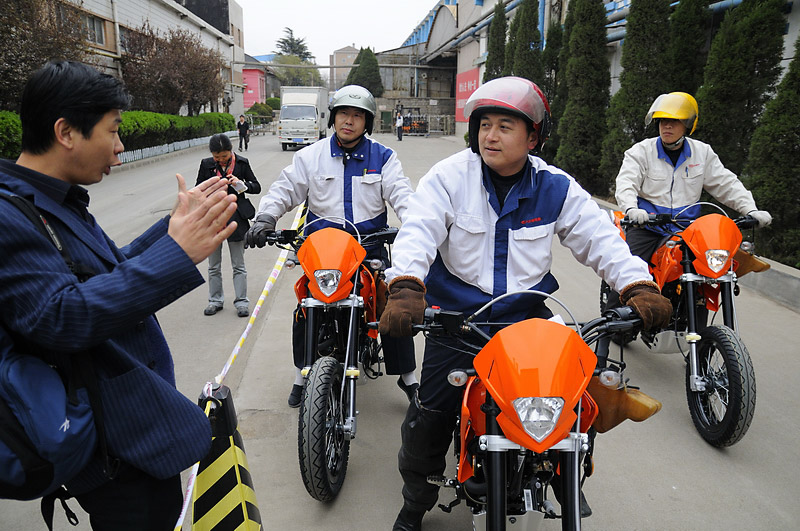
- Road testing area where non-obvious problems can be found -
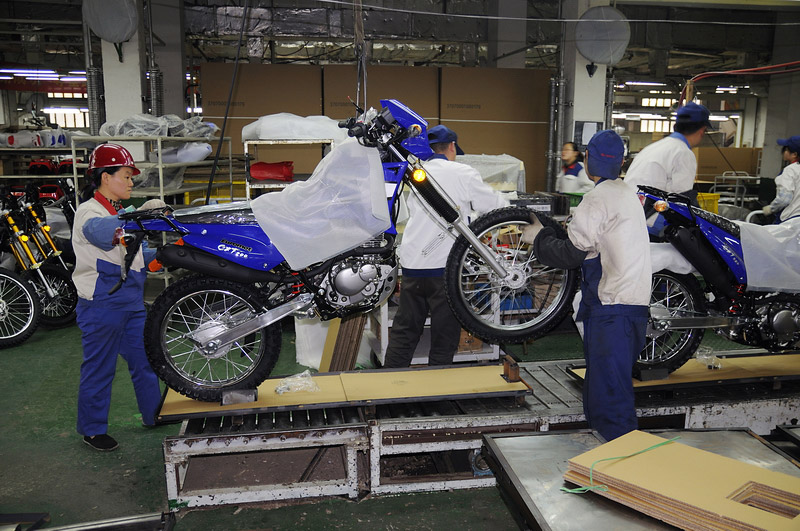
If a product passes all tests, it then gets disassembled and ready for crating.
- Bikes placed on the crating line -
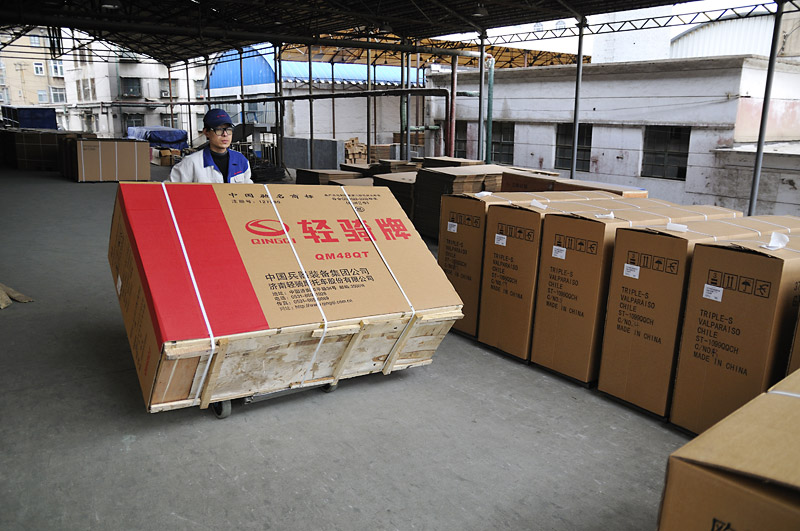
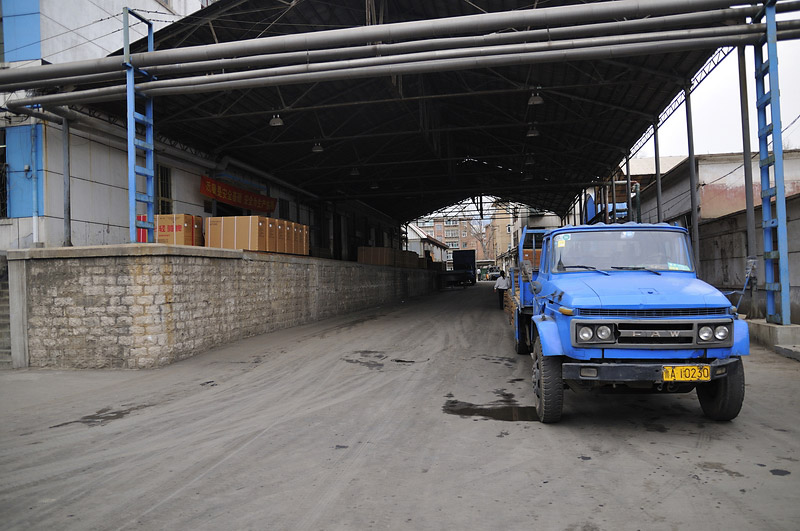
When it’s all said and done, the crates are stacked outside where trucks wait to take them away.
- Who’s want’s some? -
-
#3 Qingqi Factory Tour - Showroom and Final ThoughtsAdministrator-tron
- Join Date
- Apr 2008
- Location
- NoVA
- Posts
- 2,540
04-18-2008, 07:47 AM
- Mr. Jiao and Me -
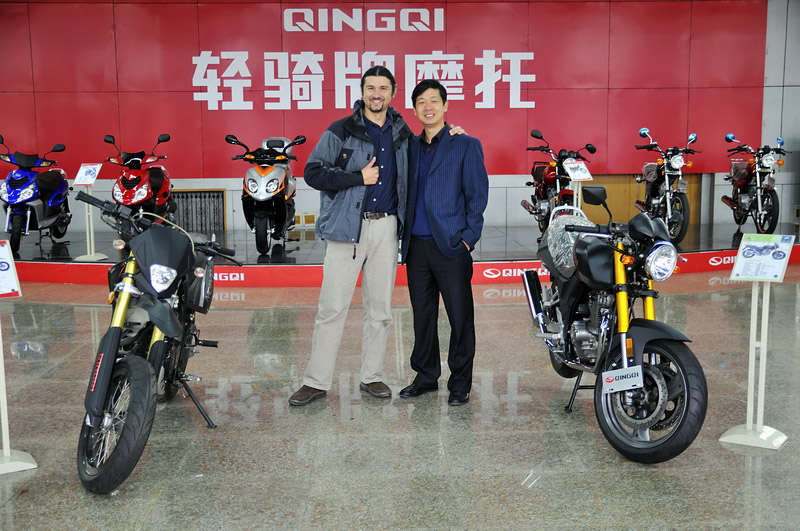
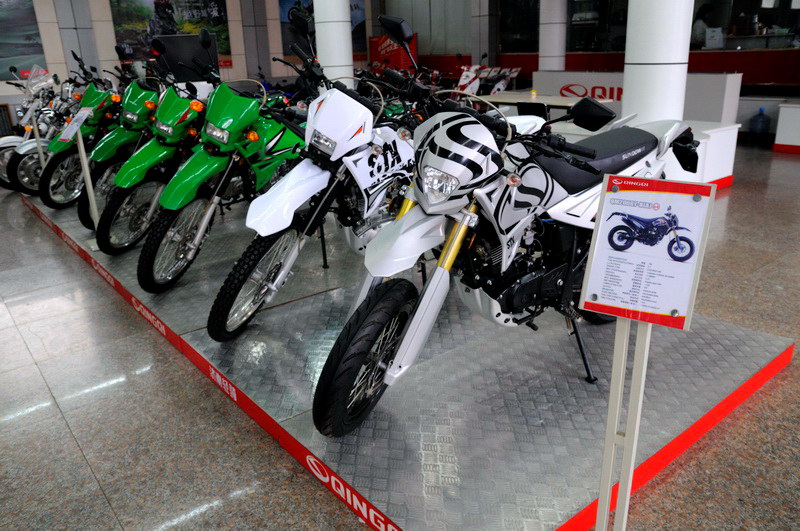
Not all units are sent to customers as some end up in QingQi’s showroom. Their most popular export model is the QM200GY (QLink XF and XP 200 in NA) dirt and super-motard bikes. Exported to many different parts of the world including South America, North America and Europe you’ll see many paint styles and badged names on the 200GY. Body style was done as joint venture with a Brazilian company BTW.
- QM200GY -
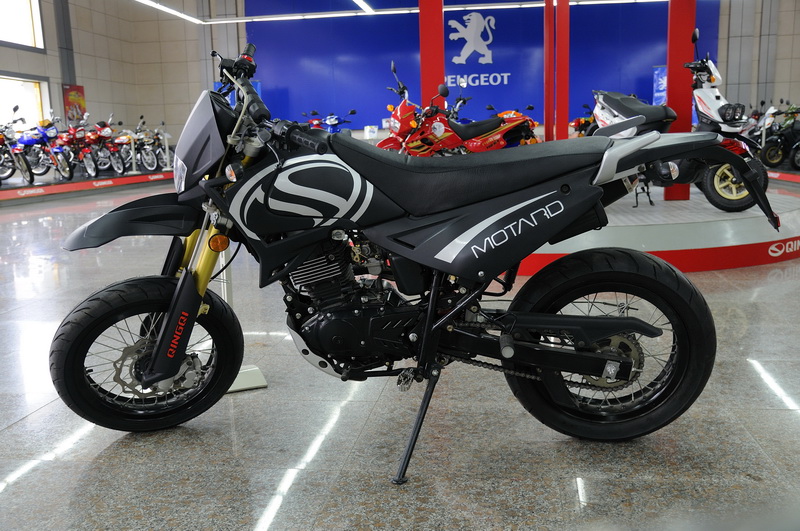
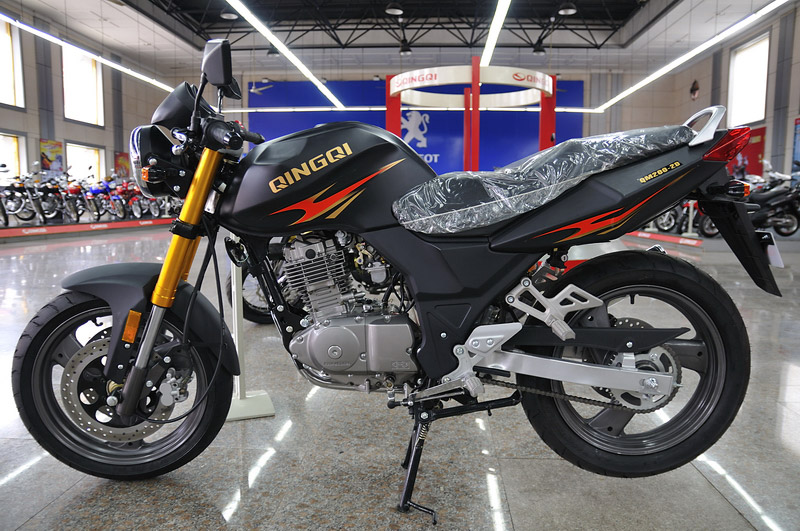
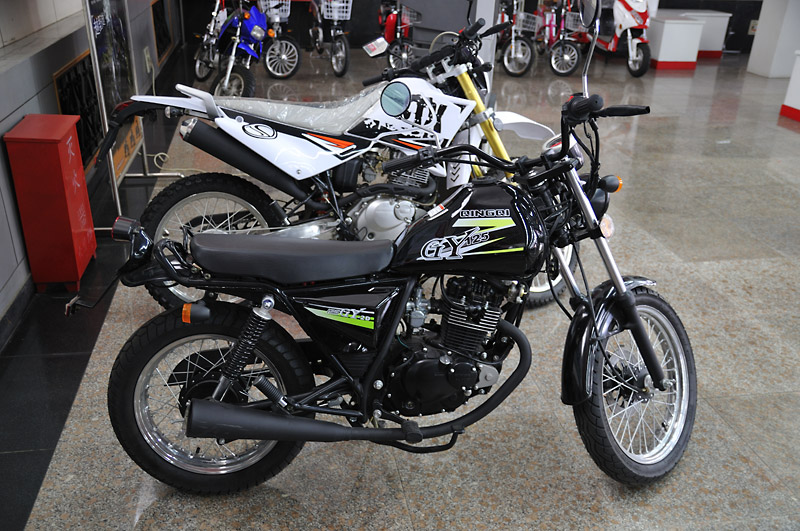
I was particularly interested in a cafe-racer type model called the QM200-2D which is currently not imported to North America. Using a similar frame and engine to the QM200GY it looked like a great around town bike .
- QingQi QM200-2D -
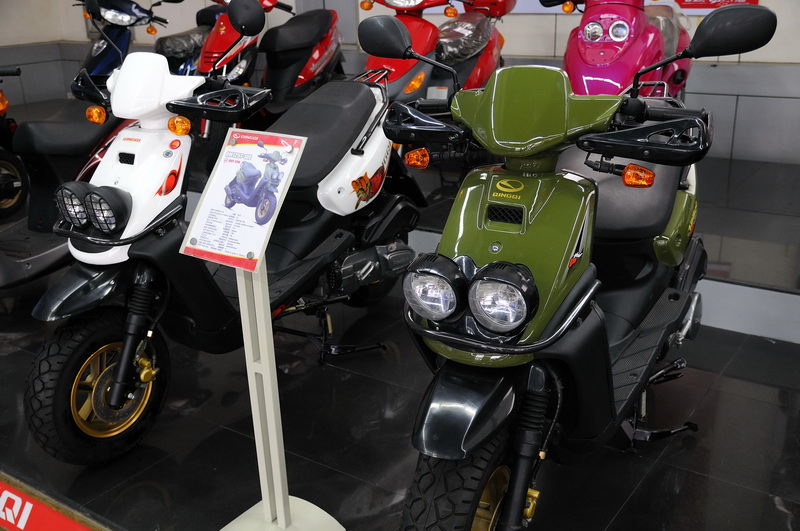
During the trip I came to find out that QingQi is well known for their scooters as they were the first in China to produce scooters. Actually, for a while they were the only company manufacturing scooters and within China the name Qingqi (ching chee) meant scooter, kind of like Xerox is to copiers and Coke is to sodas. I have great interest in scooters because they're fun, light economical and easy to use, esp around town.
The black scooter in the foreground is the model popular in Germany. Germany receives thousands of these 50cc scooters, largely used by college students.
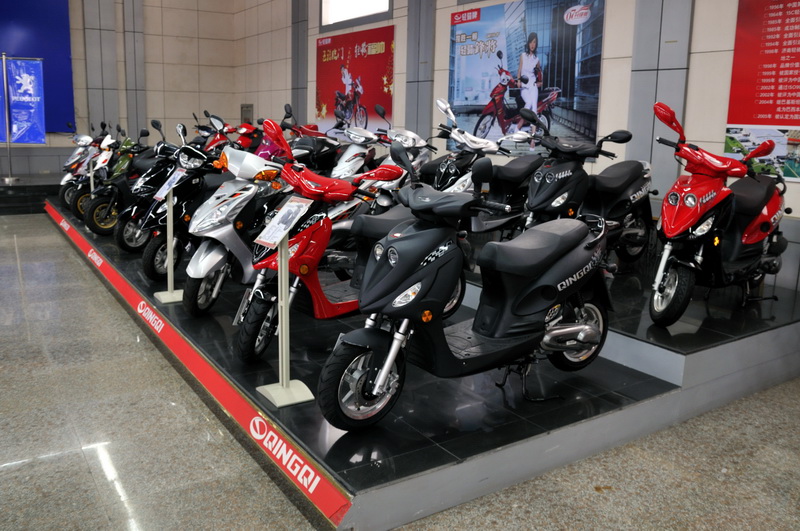
Today they offer a wide range of scooters but none have yet hit the shores of NA. I'm guessing as soon as the 250's scooters come we'll start to see them because in China they are amongst the most well built and have the least gaudy styling.
- Scooter side -
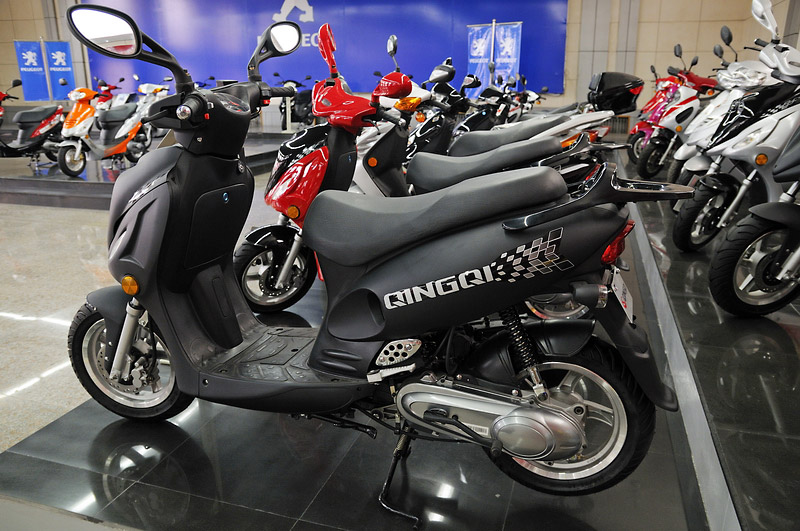
- Small 125 –
- A 125cc battle scooter fashioned after the Yamaha Zuma -
Shop Talk
We also had several hours of Q and A where I discovered some of the complexities and difficulties any international company would have when trying to expand into overseas markets. They were very open and friendly and genuinely listened to input. Both sides took a lot of notes for over four hours of discussion.
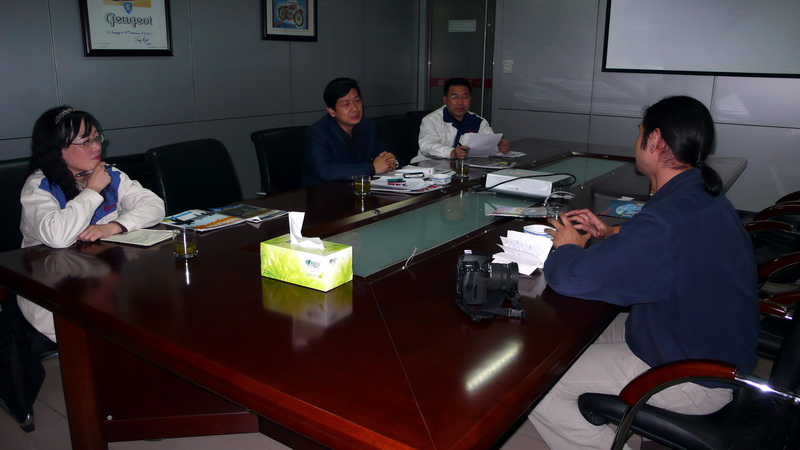
If QingQi's frame and plastics can keep progressively developing (and based on what I saw in the RnD center that's quite likely!), I think we may have ourselves a promising product line in the future market. Making a great product is only one factor though and we all know that developing good customer relationships, support and effective marketing are paramount in achieving success in the modern global market - this may be the most difficult task for any Asian company trying to enter the North American and/or West European market.
Time will tell what ultimately happens but I think we're going to have an exciting next few years bringing affordable and fun transportation to even more people of the world. I'll be trying to put together an article on these ideas and hopefully get it published in the near future, but first I need to do a lot more research and digging into extremely complex relationships.
The evolution of Chinese motorcycles is going to take several years, as it did with Japanese brands. If we want to see our Asian neighbors offer more competition across the market it will depend on a) the manufacturers offering quality goods (which they are very aware of) and b) the market's response to them by dropping money on their products. Add into the mix obvious cultural and political divides (which everyone on all sides suffer from) and what we have before us is some good ol' fashioned hard work....for everybody.
Ride Safe, Have Fun
Crazy Carl
-
Senior C-Moto Guru
- Join Date
- Apr 2008
- Location
- Yuma, Arizona (the 3:10 left me here)
- Posts
- 1,624
04-23-2008, 03:06 AM
Great report, Carl. It seems that Qingqi is on the up and up, which I am hoping for as that is hopefully going to be my next bike (the Qlink XF200 or I have found a company offering Qingqi-branded models of both the motard and enduro).
The QM200-2D reminds me a little of the hyosung comet, and if I am correct (sometimes I actually am!) is a joint venture with Peugeot (spelling?). The Qingqi site lists this bike as being EPA/DOT, so not sure if they are optimistic, or are just waiting for an importer.
I wish they would cut to the chase and just open a Qingqi USA office--their product looks much more of quality than the usual Chinese bikes coming to the US.
-
Administrator-tron
- Join Date
- Apr 2008
- Location
- NoVA
- Posts
- 2,540
04-23-2008, 06:50 AM
From what I understand, the 2D uses the Suzuki based engine. I think they are OEM'd to P-got. Originally Posted by culcune

So would I! I think they're looking to build dealership networks but that's not too easy as many are already entrenched with other brands and Chinese bikes are still recovering from the unsatisfactory first wave that arrived in NA. That said, it's still possible and may still happen. Originally Posted by culcune
CC---------------------------------------------------
Subscribe to the hippest, most happeneing Adventure Motorcycle Magazine around!
Adventure Motorcycle Dual Sport News Magazine
Help support MCM!! Buy "The Return - Riding Western China" DVD! -
http://www.motocyclops.com/buydvd/
Personal China travel info, photo and video site:
http://www.carlparker.com
-
C-Moto Not-so-Noob
- Join Date
- Apr 2008
- Location
- Saint John, New Brunswick, Canada
- Posts
- 20
 04-29-2008, 01:08 AM
But, but, but where are all the employees chained to their machines? All my friends who ride Japanese or British bikes warned me of the slave labour on my bike!
JUST KIDDING!
I'm actually very impressed with the tour.Owned:1983 Kawasaki KZ750 , 1984 Yamaha XS650 Heritage Special, 1983 Honda Silverwing GL650 Interstate, 1981 Kawasaki KZ440 LTD, 1982 Honda Silverwing GL500
Own:1978 Honda CB550K, 2007 Lifan GY-5 200
-
Senior C-Moto Guru
- Join Date
- Apr 2008
- Location
- Yuma, Arizona (the 3:10 left me here)
- Posts
- 1,624
04-29-2008, 04:00 AM
That's only at Lifan and Zongshen...:biggrin: Originally Posted by Kawazacky
-
C-Moto Noob
- Join Date
- Apr 2008
- Location
- Chile, Concepcion
- Posts
- 6
04-30-2008, 02:48 PM
that the motorcycle export to chile, if set well back in the area said: gxt 200 Euromot, this is a brand Chilean ... could say that this bike and walk by Chilean trackLast edited by tsunamoto; 04-30-2008 at 02:56 PM.
-
C-Moto Noob
- Join Date
- Apr 2008
- Location
- Chile, Concepcion
- Posts
- 6
04-30-2008, 02:50 PM
hey i am boris rodriguez and i am from chile, south america, that the motorcycle export to chile, if set well back in the area said: gxt 200 Euromot, this is a brand Chilean ... could say that this bike and walk by Chilean track
bye!
-
Administrator-tron
- Join Date
- Apr 2008
- Location
- NoVA
- Posts
- 2,540
05-01-2008, 12:28 AM
Boris!
Nice to have you with us on the site! Thanks for telling me where the actually bikes went as I honestly didn't know. Are these bikes popular in Chile?
CC---------------------------------------------------
Subscribe to the hippest, most happeneing Adventure Motorcycle Magazine around!
Adventure Motorcycle Dual Sport News Magazine
Help support MCM!! Buy "The Return - Riding Western China" DVD! -
http://www.motocyclops.com/buydvd/
Personal China travel info, photo and video site:
http://www.carlparker.com




| « Previous Thread | Next Thread » |
| Bookmarks |
Bookmarks |


A Working VPN Solution?
04-11-2024, 03:10 AM in Off Topic Discussions